
Professional Development That Moves Learning Forward
Practical strategies. Engaging experiences. Training designed for your educators and students.
Bring Meaningful Innovation to Your Classrooms
Bring meaningful innovation to your classrooms with professional development that is practical, collaborative, and built around your organization's goals. EDGEucating offers engaging training experiences that help educators confidently integrate STEAM, educational technology, project-based learning, computational thinking, literacy, math, and inclusive teaching practices into everyday instruction.
Whether your educators are opening a new set of classroom tools, developing a districtwide STEM initiative, or looking for fresh ways to increase student engagement, training is adapted to make the learning relevant, attainable, and immediately useful.
Every school, district, organization, and student population is different. That's why every session is customized to reflect:
- Grade levels and subject areas
- Educators' experience and comfort with technology
- Curriculum, standards, and instructional priorities
- Available devices, products, and classroom resources
- Student demographics, strengths, and learning needs
- Strategic goals, initiatives, and desired outcomes

Flexible Training Options
Sessions may range from short introductions to immersive, multi-day learning experiences. Topics can also be combined into a customized agenda aligned with your organization's needs.
Professional development can be delivered:
- Virtually or in person
- As a keynote, interactive webinar, or conference session
- As a hands-on workshop
- As a half-day, full-day, or multi-day learning experience
- As a customized training series or ongoing coaching program
- For individual schools, district teams, leadership groups, after-school staff, or community organizations
Sample Professional Development Offerings
The following sessions are examples of available professional development. Titles, activities, tools, grade bands, and outcomes can be customized for your audience.
STEM, Engineering & Making
Gamification in Education: Make Participation More Purposeful
Explore how game elements can support participation, motivation, and collaboration within instructional goals.
The EDGEucating approach
- Begin with instructional purpose, then choose game elements
What we’ll explore
- Challenges, feedback systems, and classroom incentives
- Collaborative and gamified learning experiences
Expected outcomes
- Wide adaptation of game elements for classroom use
- Connect incentives and challenges to learning goals
Ideal for
- K–12 educators, instructional coaches, administrators
Engineering for Every Classroom: Turn Questions Into Testable Solutions
Use approachable engineering challenges to help students ask testable questions, learn from failure, and develop solutions.
The EDGEucating approach
- Shape challenges around available resources and instructional priorities
What we’ll explore
- Engineering and design-thinking practices
- Low-cost materials and classroom technology
- Standards alignment and career connections
Expected outcomes
- Balance standards-aligned exploration with artistic expression
- Connect incentives and challenges to learning goals
- Wide adaptation of game elements for classroom use
Ideal for
- K–12 educators, instructional coaches, administrators
Watch It Wiggle, Light Up & Move: Quick STEAM Projects for the Classroom
Give students quick, hands-on STEAM activities that invite them to design, build, test, and improve—even when time and materials are limited.
The EDGEucating approach
- Customize projects around time, materials, and learning goals
What we’ll explore
- Light-up creations and simple circuits
- Solar-powered designs and scribble bots
- Moving sculptures and engineering challenges
Expected outcomes
- Adapt quick projects for different grade levels
- Guide students through testing and improvement
Ideal for
- Elementary educators, middle school educators, Librarians, makerspace teams
Low-Tech, Sustainable STEM: Hands-On Projects With Everyday Materials
Great STEM learning doesn’t require an expensive makerspace. Use recycled, reusable, and everyday materials to connect engineering with environmental literacy and community problem-solving.
The EDGEucating approach
- Make hands-on STEM accessible within limited budgets
- Incorporate Sustainable Development into student ideas
What we’ll explore
- Recycled and reusable building materials
- Engineering and design challenges
- United Nations Sustainable Development Goals
Expected outcomes
- Build STEM activities with affordable materials
- Connect design challenges to environmental questions
Ideal for
- K–12 educators, community programs, after-school teams
Coding, Robotics & Computational Thinking
Computational Thinking Across Subjects: From Classroom to Career
Explore how decomposition, pattern recognition, logical reasoning, and algorithmic thinking can help students solve problems and connect classroom learning with careers.
The EDGEucating approach
- Adapt strategies for coding and non-coding classrooms
What we’ll explore
- Decomposition and pattern recognition
- Logical and algorithmic thinking
- Project-based, cross-curricular applications
Expected outcomes
- Integrate computational thinking across subjects
- Connect problem-solving practices with career exploration
Ideal for
- Elementary educators, secondary educators, curriculum leaders
Code, Create, and Connect: Introduce Computational Thinking to Young Learners
Help PreK–3 students explore sequencing, patterns, algorithms, debugging, and problem-solving through developmentally appropriate, hands-on learning.
The EDGEucating approach
- Select physical coding tools that fit your program
What we’ll explore
- Sequencing, patterns, algorithms, and debugging
- Robots suited for Early Learners such as: KIBO, KaiBot, and, Bee-Bot
- Literacy, math, science, and career connections
Expected outcomes
- Introduce foundational coding concepts through play
- Connect computational thinking across early learning
Ideal for
- PreK–3 educators, early childhood specialists, librarians
Micro: bit Magic: Turn Classroom Devices Into Creative Learning Tools
Learn the fundamentals of micro: bit programming through classroom-ready projects connected to science, engineering, math, art, literacy, and data.
The EDGEucating approach
- Connect device skills to existing instructional goals
- Discover additional edtech tools that work with micro: bits
What we’ll explore
- Core micro: bit functions
- Interactive, cross-curricular projects
- Adaptable lesson ideas and resources
Expected outcomes
- Build foundational micro:bit programming skills
- Adapt projects for different experience levels
Ideal for
- Upper-elementary educators, secondary educators, makerspace facilitators
Drones, Rovers, and Immersive Technology in the Classroom: Build Tomorrow’s Skills
Explore how programmable devices can support coding, engineering, data collection, teamwork, and career-connected learning.
The EDGEucating approach
- Pair device exploration with responsible implementation planning
What we’ll explore
- Hands-on drone and rover challenges
- Coding, engineering, and data collection
- Safety, student roles, and classroom management
Expected outcomes
- Plan instructional uses for programmable devices
- Anticipate classroom implementation needs
Ideal for
- STEM educators, technology teachers, career-readiness programs
Bots With Heart: Build Social-Emotional Skills Through Robotics
Use collaborative robotics challenges to strengthen communication, empathy, self-management, and relationship skills as students solve problems together.
The EDGEucating approach
- Make collaboration part of the robotics challenge
What we’ll explore
- Listening, negotiation, and shared responsibility
- Self-awareness and self-management
- Classroom, advisory, and after-school applications
Expected outcomes
- Structure robotics activities around SEL goals
- Guide reflection on teamwork and frustration
Ideal for
- K–8 educators, counselors, special educators
Literacy, Math & Data
Tech, Tales, and Thinking: Bring Literacy to Life Through STEM
Connect children’s literature and informational texts with engineering, coding, robotics, animation, design, and problem-solving.
The EDGEucating approach
- Begin with the text and its instructional purpose
What we’ll explore
- Storytelling and hands-on STEM challenges
- Coding, robotics, animation, and design
- Meaningful responses to reading
Expected outcomes
- Build STEM responses around selected texts
- Support comprehension through making and explanation
Ideal for
- PreK–8 teachers, literacy specialists, librarians
Make Math Matter: Use Coding and Creativity to Solve Authentic Problems
Help students experience math as a tool for designing, creating, and solving problems through manageable technology and STEAM activities.
The EDGEucating approach
- Keep technology manageable for classroom teachers
What we’ll explore
- Coding and digital manipulatives
- Robotics and STEAM challenges
- Productive struggle and creative problem-solving
Expected outcomes
- Connect math concepts with authentic applications
- Plan activities that encourage mathematical discussion
Ideal for
- Elementary educators, math coaches, instructional coaches
Digging Into Data: Build Data Literacy Through Real-World Investigations
Use hands-on, real-world learning to help students collect, organize, represent, interpret, and communicate data.
The EDGEucating approach
- Ground data concepts in questions students can investigate
What we’ll explore
- Graphs, measurement, and sensors
- Surveys and authentic data sets
- Scientific and project-based investigations
Expected outcomes
- Plan accessible data-learning experiences
- Connect data skills with real-world investigations
Ideal for
- Elementary educators, middle school educators, science teachers
Reading, Writing & STEM: Make Literacy Learning More Interactive
Bring reading and writing to life with approachable projects that blend speaking, design, STEM, and technology. No advanced technology experience is required.
The EDGEucating approach
- Use accessible tools that support literacy goals
What we’ll explore
- Engaging books and response activities
- Simple technology integrations
- Cross-curricular STEM challenges
Expected outcomes
- Adapt creative responses to selected texts
- Connect literacy goals with STEM activities
Ideal for
- PreK–8 educators, literacy teams, instructional coaches
Stop Motion Storytelling: Bring Student Ideas and Academic Content to Life
Learn how students can use stop-motion animation to retell stories, explain concepts, recreate historical events, demonstrate processes, and share original ideas.
The EDGEucating approach
- Connect creative production with academic explanation
What we’ll explore
- Planning and storyboarding
- Set design and media creation
- Cross-curricular assessment strategies
Expected outcomes
- Plan a stop-motion learning experience
- Assess student-created media against instructional goals
Ideal for
- Elementary educators, secondary educators, media specialists
Technology, AI & Inclusion
Assistive Technology in the Classroom: Expand Access and Participation
Explore tools and strategies that give diverse learners more ways to access content, communicate, create, and demonstrate understanding. Match assistive technology tools to learner needs and classroom contexts.
The EDGEucating approach
- Evaluate tools through learner access and participation
What we’ll explore
- Speech-to-text tools and visual supports
- Accessible coding and adaptive-learning products
- Digital accessibility and social-emotional supports
Expected outcomes
- Identify technology that addresses participation barriers
- Consider tools within varied classroom contexts
Ideal for
- General educators, special educators, interventionists
Demystifying AI in Education: Teach It Responsibly and Without Fear
Build confidence introducing artificial intelligence in age-appropriate, responsible, and meaningful ways. No previous AI experience is required.
The EDGEucating approach
- Emphasize understanding AI before assigning its use
What we’ll explore
- How artificial intelligence works
- Ethics, bias, privacy, and media literacy
- Practical classroom tools and applications
Expected outcomes
- Explain foundational AI concepts more clearly
- Plan responsible, age-appropriate classroom applications
Ideal for
- K–12 educators, administrators, technology teams
Custom Training
Need Something Different?: Build Professional Learning Around Your Priorities
Create a professional development experience around a specific product, curriculum area, grade band, initiative, student need, or instructional challenge.
The EDGEucating approach
- Customize examples, pacing, and content for your team
What we’ll explore
- Your existing tools and instructional priorities
- Connected topics across curriculum areas
- Support following the initial training
Expected outcomes
- Define a focused professional learning need
- Combine relevant topics into one experience
Ideal for
- Schools, district teams, community organizations
From Vision to Reality
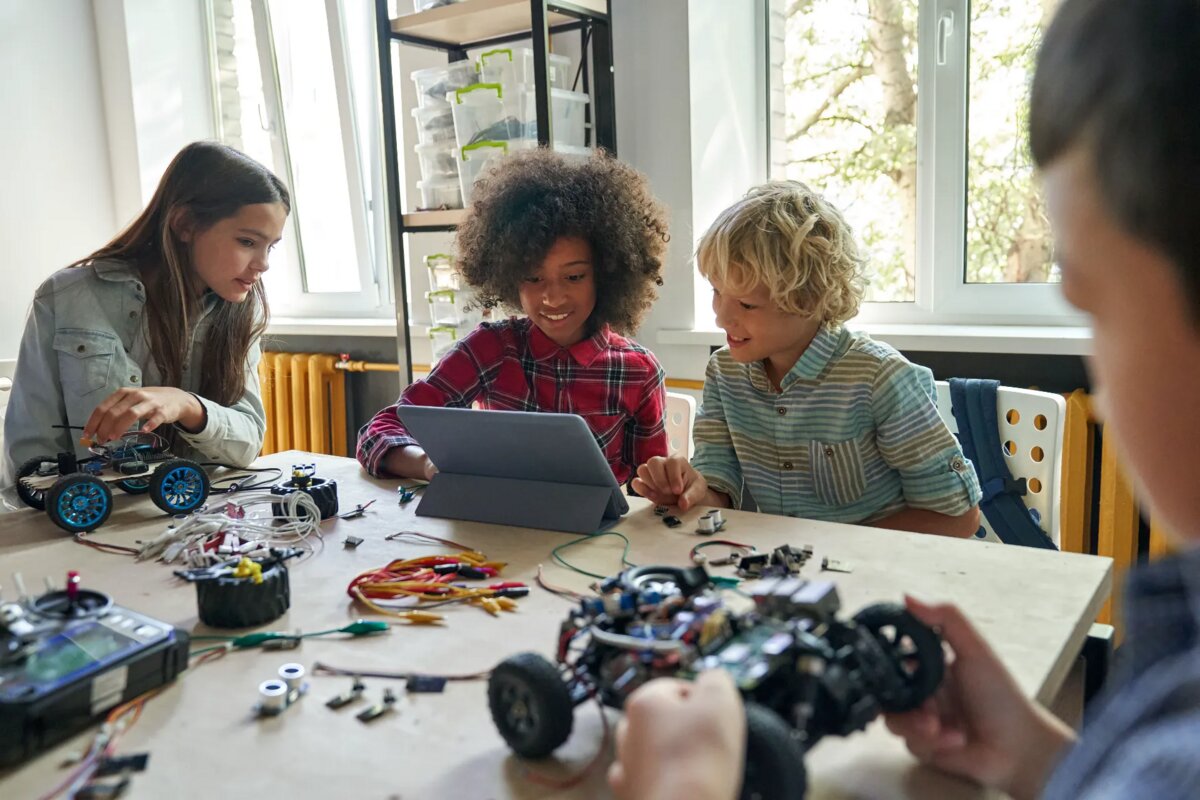
Build Successful After-School STEM and Robotics Programs — develop or strengthen a sustainable, student-centered STEM club, robotics team, competition program, or enrichment initiative, covering program goals and structure, tool and equipment selection, inclusive recruitment, curriculum planning, Positive Youth Development, staff roles and training, community partnerships, competitions and showcases, funding and sustainability, and college and career connections. Ideal for: school leaders, program directors, STEM coordinators, teachers, and community organizations.
EDGEucating professional development is designed to be:
- Practical — participants leave with strategies and ideas they can use, not simply information to consider.
- Hands-On — whenever possible, educators experience activities from the learner's perspective by building, testing, creating, coding, and collaborating.
- Inclusive — training considers accessibility, diverse learning needs, cultural relevance, and multiple pathways for student participation.
- Curriculum Connected — technology and STEM tools are connected to instructional priorities, standards, and authentic learning goals.
- Collaborative — sessions create space for educators to share ideas, solve problems, and plan for their own classrooms.
- Customized — examples, tools, pacing, and outcomes are adapted to fit your educators, students, resources, and organizational goals.
What Educators Can Expect
Training That Works the Way Real Classrooms Do.
Every session is built to be practical and hands-on, participants leave with strategies they can use right away, often experiencing the activity from the learner's perspective: building, testing, creating, and collaborating. Sessions are collaborative by design, creating space for educators to share ideas and solve real problems together.
Training stays curriculum connected, tied to your standards and instructional priorities, and inclusive of diverse learners and multiple pathways for participation. Every detail, from examples to pacing, is fully customized to fit your educators, students, and goals.